


Plants remain understudied in the field of genomics despite rapid advancements in sequencing technologies. With complex, repeat rich genomes and the obstacle of resolving ploidy, short read sequencing has offered limited insight into these complex organisms. Long read sequencing presents an untapped frontier in genomic insights but is limited by sample input requirements, demanding massive amounts of ultra-high molecular weight (uHMW) DNA. For densely tissued organisms like plants, how do you gently extract high yields of delicate, unbroken DNA strands without using aggressive mechanical force?
This is where the choice of platform and protocol matters. While PacBio and Oxford Nanopore Technologies (ONT) both offer incredible long-read systems, we find ONT is often the most forgiving when input yields are low. ONT Ultra-Long sequencing technology has opened the door to highly contiguous genome assemblies by enabling exceptionally long reads that can stretch well beyond 50-100kb in length. These long reads are invaluable for resolving complex genomic regions, such as repeats and structural variants, that are often difficult to sequence and assemble with other long- and short-read sequencing technologies. Given these advantages, it’s natural to ask: why isn’t everyone using Ultra-Long sequencing? The answer lies in the difficulty of obtaining suitable input material.
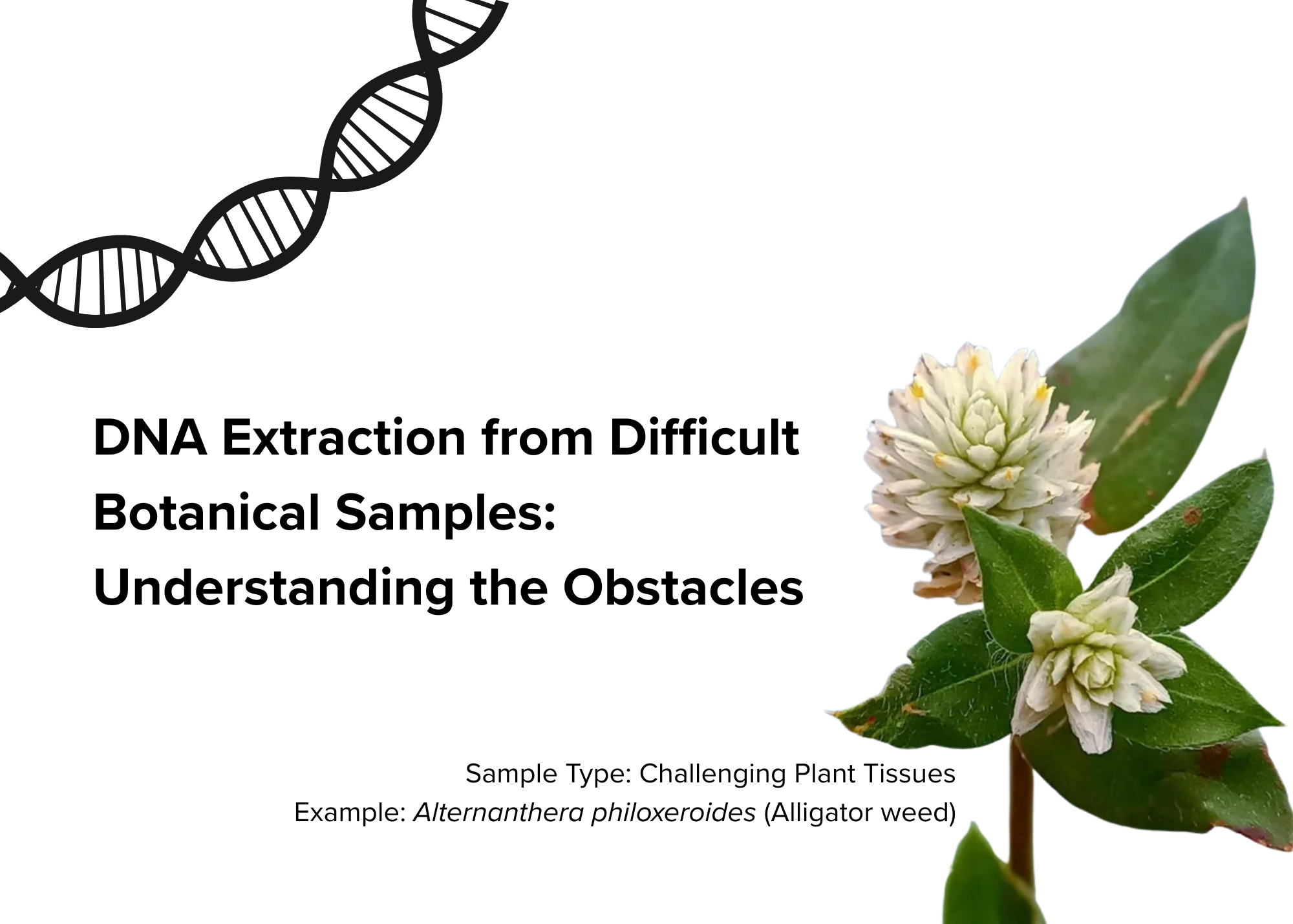
SeqCenter recently encountered this paradox with a submitted plant sample destined for ONT’s Ultra-Long sequencing. This sample was Alligator weed (Alternanthera philoxeroides) which is a hardy aquatic and semi-terrestrial plant, containing high levels of polysaccharides, phenolic compounds, and other secondary metabolites that complicate DNA extraction. These compounds can co-purify with DNA, inhibit downstream enzymatic reactions, causing DNA damage or fragmentation and reducing overall sequencing performance. Plant extractions in general require balancing purity with preservation of long DNA fragments, and alligator weed adds another layer of difficulty due to its fibrous tissue and chemical composition. SeqCenter successfully processed this sample through off-label modifications to PacBio’s PanDNA Nanobind plant extraction protocol. Ultimately, this method of gentle lysis, extensive cleanup, and low-force mechanical agitation allowed us to extract high yields while preserving DNA integrity.
From this hardy plant, SeqCenter successfully extracted nearly 100ug of uHMW DNA with initial fragment size estimates reaching 168kb and strong purity metrics (Nanodrop ratios of 260/280 of 1.8 and 260/230 ranging from 1.73-2.2). The sample then progressed through ONT’s Ultra-Long DNA sequencing kit (SQK-ULK114), which uses a transposase-based, PCR free workflow optimized for uHMW DNA. Sequencing on a single PromethION flowcell yielded 38Gbp of data and read lengths of 131kb.
This case study reinforces that Ultra-Long sequencing can resolve the most complex regions of plant genomes, yet its success depends entirely on the ability to obtain intact DNA from challenging inputs. Alligator weed exemplifies the obstacles that many plant species present, and it also illustrates the value of methodical protocol development. SeqCenter’s ability to refine extraction workflows and support demanding sequencing applications positions us as a reliable partner for generating high quality Ultra Long data from even the most difficult plant materials.
Ready to power your next long-read discovery?
Add these foundational services to your cart to get started: