


At SeqCenter, we are incredibly proud of the groundbreaking work our customers do every day. In this limited series, we are highlighting the impactful research of our collaborators, sharing their discoveries to celebrate their success and inspire the scientific community.
Featured Publication:
[1] Wu Y, Suarez-Reyes C, Tang NL, Kneubehl AR, Weatherhead JE (2025). Repeat Ascaris challenge reduces worm intensity through gastric cellular reprograming. PLoS Neglected Tropical Diseases, 19(5): e0013141. doi: 10.1371/journal.pntd.0013141
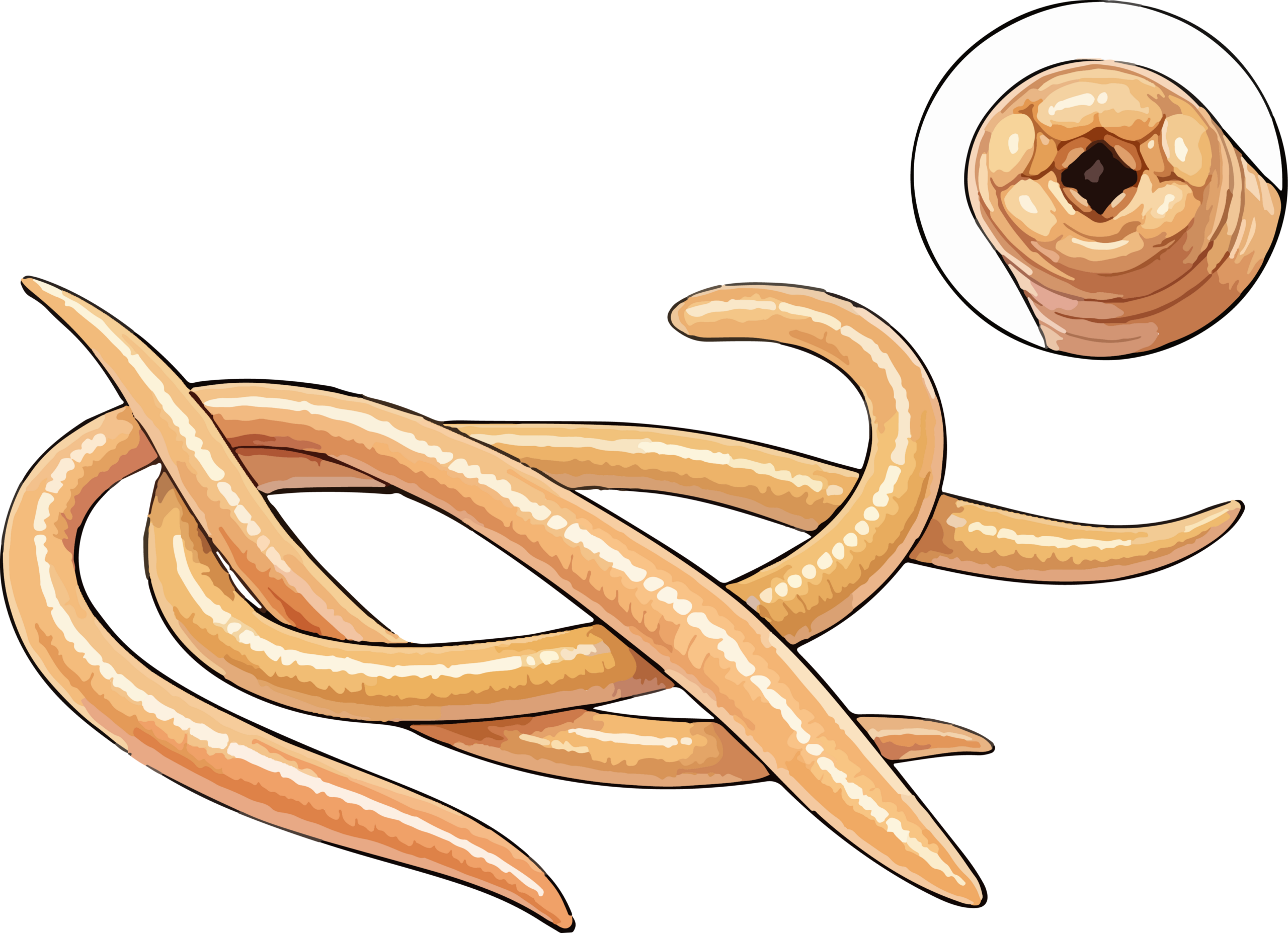
Ascariasis remains one of the most widespread parasitic infections globally, yet the biology behind why some individuals carry heavy worm burdens while others do not has remained unclear1. A research team at Baylor College of Medicine in Houston, Texas set out to uncover how repeated exposures to Ascaris may lead to lower infection intensity over time, particularly as children age into adulthood. Understanding this pattern is essential for improving global health strategies in regions where reinfection is a constant reality.
To investigate this, the researchers developed a controlled repeat‑challenge mouse model and paired it with bulk RNA sequencing and protein‑level analyses to map how the stomach responds to ongoing exposure 1. Their work revealed that the stomach is not just a transit point for Ascaris eggs. Instead, it is an active barrier whose cellular state determines whether larvae can hatch and migrate. By profiling gastric gene expression with bulk RNA‑Seq, the team identified a coordinated shift in cell identity after repeated infections.
These transcriptomic and protein‑level datasets showed that repeated Ascaris challenge triggers a form of gastric cellular reprogramming 1. Parietal cells responsible for acid secretion undergo apoptosis, while chief cells begin to transdifferentiate into a protective metaplastic state. This remodeling reduces the stomach’s ability to support larval hatching, ultimately lowering the number of larvae that reach the liver. Notably, this protective effect occurred even in the absence of adaptive immunity, revealing a previously unrecognized, non‑immune mechanism of resistance.
For researchers working in parasitology, mucosal immunology, or host‑pathogen interactions, this study demonstrates how bulk RNA‑Seq can uncover barrier‑level mechanisms that traditional immunologic approaches may overlook. If your work requires mapping host tissue responses, identifying differential gene expression, or building similar transcriptomic views of infection biology, SeqCenter’s RNA‑Seq workflows provide the high‑quality data foundation needed to drive these kinds of insights.
Ready to power your next multi-omics discovery?
Add these foundational services to your cart to get started: