

At SeqCenter, we are incredibly proud of the groundbreaking work our customers do every day. In this limited series, we are highlighting the impactful research of our collaborators, sharing their discoveries to celebrate their success and inspire the scientific community.
Featured Publication:
[1] Swiatek L-S, Surmann K, Eger E, Müller JU, Gesell Salazar M, Heiden SE, Werner G, Hübner N-O, Bohnert JA, Becker K, Völker U, Schwabe M and Schaufler K (2025). Multi-omics investigation reveals unique markers in Klebsiella pneumoniae compared to closely related species. Frontiers in Microbiology, 16:1657680. doi: 10.3389/fmicb.2025.1657680
Klebsiella pneumoniae is a notorious, drug-resistant microbe responsible for severe hospital-acquired infections1. But why does Klebsiella pneumoniae survive and thrive in the human body so much better than its less prevalent relatives? To find out, researchers from the Helmholtz Centre for Infection Research, the Robert Koch Institute, and the University of Medicine in Greifswald Germany teamed up to create a top-to-bottom view of Klebsiella pneumoniae biology. By examining its DNA (the blueprint), RNA (the active instructions), and protein expression (the final building blocks), they aimed to uncover the metabolic survival mechanisms at play in harsh environments like the human urinary tract.
To build the foundation for this ambitious study, Swiatek et al. set out to establish representative genomes of critical isolates through whole genome sequencing under the Illumina and Nanopore technologies1. Together, these datasets provided a structural blueprint of these isolates’ genomes, allowing the research team to identify differences between this dangerous superbug and its relatives. This led to the discovery of 107 unique genes found only in the superbug, exposing the hidden biological tools it uses to survive and spread in nutrient-limited environments.
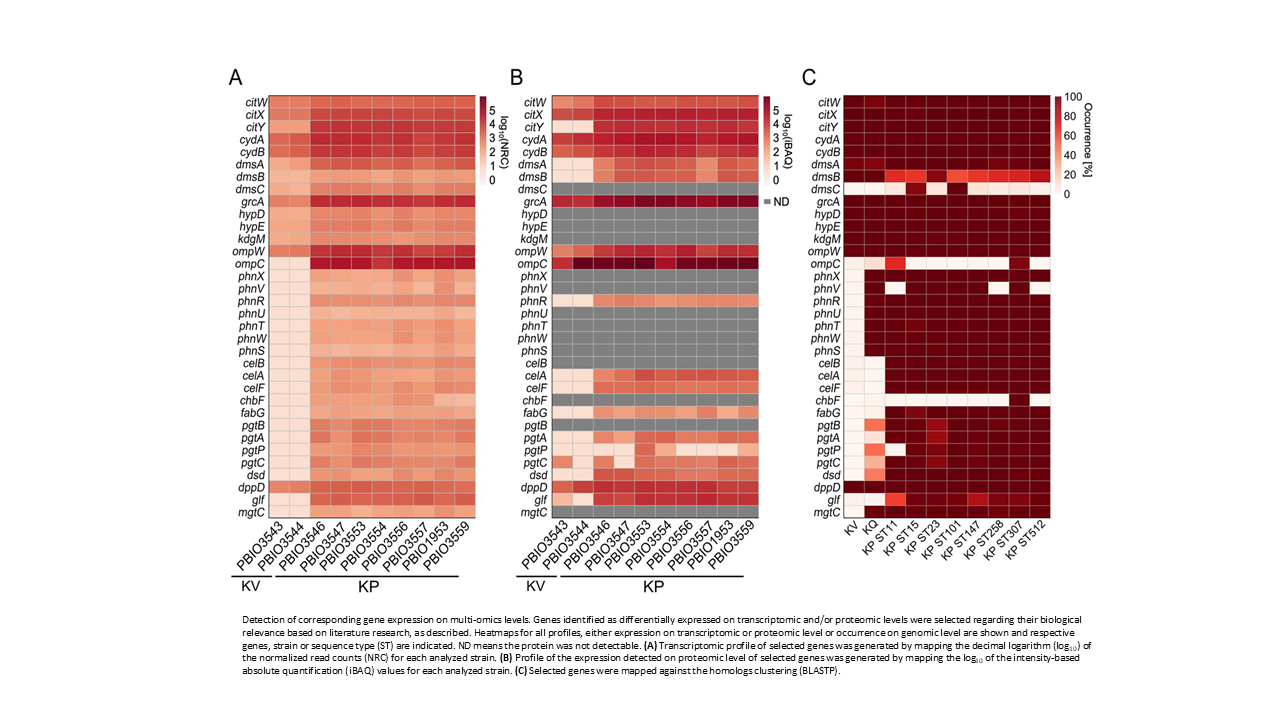
However, a genetic blueprint is only part of the story. Swiatek et al. also needed to see the machinery in motion1. The team was able to combine RNA sequencing data and proteomic analyses to further identify genomic functions adaptively regulated or uniquely present within their isolates. They observed 193 loci active in this superbug to harvest energy in resource limited systems. Ultimately, this comprehensive approach connected the dots between the bacteria’s DNA and its real-world behavior, providing vital insights that could pave the way for better, more targeted diagnostics or treatments.
Ready to power your next multi-omics discovery?
Add these foundational services to your cart to get started: